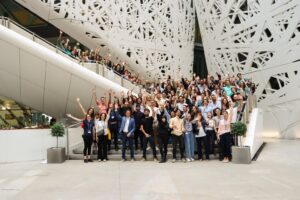
Transforming scientific discoveries into real therapies was the central theme of the second international conference"Future Trends in Translational Medicine – From Molecules to Therapies," held at the San Giovanni a Teduccio University Complex in Naples on October 30–31, 2025. Organized by Human Technopole together with its Centre for Innovation and Technology Transfer (CITT), in collaboration with Nature Italy and with the patronage of the Campania Region, the event brought together international researchers, clinicians, and industry representatives to explore how discoveries in molecular biology, genetics, and pharmacology can be translated into concrete clinical applications.
The conference focused on four key topics—metabolism,cancer,rare genetic diseases,and gene therapy and therapeutic RNA—each representing clinical areas where treatment options remain limited but which also offer new opportunities for therapeutic intervention. With two keynote lectures and a wide range of high-level scientific contributions, the event offered an overview of how basic science can have a direct impact on people's health and well-being. In this context, a common thread ran through all the themes to highlight the entire translational pathway, from fundamental molecular discoveries to the development of targeted therapies, vividly reflecting the overall objective of the conference.
Keynote Highlights
The conference opened with a keynote lecture by Dr. Richard Finn, Professor at UCLA, whose pioneering work onCDK4/6 inhibitorshas transformed the therapeutic landscape for breast cancer patients. Finn traced the transition from generalized, uniformly applied cancer therapies to the eraof precision oncology, in which treatments are tailored based on tumor biology and genetic markers. A complex disease such as cancer can have different molecular origins and manifest itself differently depending on individual genetic and environmental factors. Consequently, not all patients can benefit from the same therapy: they must be selected based on the predicted probability of response to treatment. As Dr. Finn pointed out, precision medicine also brings newchallenges: identifyingreliable biomarkers,designing smarter clinical trials, andensuring equitable access to advanced therapies. "The challenge of targeted therapies," he noted, "is to get the right drug to the right patient."
On the second day,Dr. Stefanie Dimmeler, Director of the Institute for Cardiovascular Regeneration at Goethe University in Frankfurt, gave a highly relevant keynote lecture onaging and cardiovascular disease. Her presentation emphasized howvascular aging,inflammation, andclonal hematopoiesisare active contributors to disease, and not simply age-related phenomena. Small molecules known assenolytics, which are capable of eliminating senescent cells, are showing promising results in restoring cardiac function and reducing inflammation. These observations pave the way for the development of anti-aging strategies that could soon enter cardiovascular clinical practice, particularly in elderly populations.
Rethinking Metabolism: From Energy Source to Signal
The first main thematic session was dedicated tometabolism, with an introductory presentation byDr. Heidi McBride, Professor at McGill University, who called for a profound rethinking of how we viewmitochondria. Traditionally viewed as thepowerhouses of the cell, mitochondria are emerging askey regulators of immunity,cell signaling, andthe integration of cellular responses. Future therapies could therefore targetorganelle communicationandmitochondrial dynamics, particularly in diseases such as cancer and neurodegenerative diseases.
Next,Dr. Shingo Kajimura, Professor at the Howard Hughes Medical Institute (HHMI), addressed the issue ofweight regain after treatment with GLP-1 receptor agonists, drugs that have recently revolutionized obesity therapy. His laboratory has identified thecalcium cycleas a promising target for supporting energy expenditure independently of appetite suppression. By studyingATP dissipation processesand theunderlying molecular mechanisms, the goal is to develop therapies capable of preventing fat mass regain while preserving muscle mass, a crucial aspect for maintaining long-term metabolic health.


Dr. Sadaf Farooqi, Professor at the University of Cambridge (United Kingdom), then addressed the complexgenetics of severe obesity, a condition often considered to be primarily lifestyle-related. Her work has shown how rare mutations in genes involved in regulating energy homeostasis and appetite can cause early-onset obesity. These findings have led to the development oftargeted treatmentsthat address the primary cause of the disease, offering new therapeutic prospects for patients who often face not only medical difficulties but also significant social stigma.
Rethinking Cancer: Addressing the Dynamic Nature of Tumors
The session dedicated to cancer featured a rich succession of presentations focusing on the latest advances in molecular mechanisms and clinical strategies.Dr. Celeste Simon, Associate Director at the University of Pennsylvania, opened with a presentation onclear cell renal cell carcinoma(ccRCC), a tumor with uniquemetabolic dependencies, particularly oncholesterolandbile acids. Targeting these pathways by inhibiting their molecular regulators represents a new strategy for weakening these tumors, enhancing the immune response, and overcoming mechanisms of therapeutic resistance.


Shifting the focus beyond genetic mutations alone,Dr. Pier Giuseppe Pelicci, Director of Research at the European Institute of Oncology (IEO) in Milan, explored theplasticityof cancer cells and the roleof non-genetic adaptationinchemoresistanceandmetastatic progression. His research onthe interferon signaling pathwayin leukemia cells suggests that restoring immune pathways may re-sensitize tumors to therapies. This dynamic view of tumor immunosurveillance offers an alternative perspective to traditional models based exclusively on genetic alterations.
In the fieldof immunotherapy,Dr. Alice Giustacchini, Research Group Leader at Human Technopole, presented an innovative approach to the treatment ofpediatric acute myeloid leukemia (pAML)based onsingle-cell multi-omic analysis. Her team identified specific markers of leukemia stem cells, paving the way for the development of safer and more effectivemulti-target CAR-T therapies. This work is a prime example of how high-resolution cell analysis can guideprecision immunotherapy strategies, particularly in vulnerable pediatric populations.
Rare Genetic Diseases: From Incurable to Treatable
The thematic sessions on the second day opened with a focus onrare genetic diseases, long considered too complex or unattractive for pharmaceutical development. AsDr. Alberto Auricchio, Scientific Director of the Telethon Institute of Genetics and Medicine (TIGEM) in Naples, showed, this scenario is changing rapidly. His group has developedgene therapies based on dual AAV vectors fordiseases such asStargardt's diseaseandUsher syndrome, overcoming limitations related to gene size and delivery. Preclinical results and early clinical data suggest that conditions once considered untreatable may soon have effective and lasting therapies.
Dr. Alessandro Aiuti, Deputy Director of the San Raffaele Telethon Institute for Gene Therapy (TIGET), provided an overview of the evolution ofgene therapies based on hematopoietic stem cells, which have revolutionized the treatment of diseases such asADA-SCID,metachromatic leukodystrophy, andWiskott-Aldrich syndrome. These "one-shot" therapies, based on the use of genetically corrected autologous cells, offer the prospect of a lasting cure. However, the challenges are not only scientific, but alsoregulatory,logistical, andethical, particularly in ensuringequitable accessto treatments with high clinical impact.
“The challenges are not only scientific, but alsoregulatory,logistical, andethical,
particularly in ensuringequitable accessto treatments with high clinical impact.”Alessandro Aiuti (TIGET)
To complete the picture,Dr. Nicole Soranzo, Head of the Research Center for Genomics – Population & Medical Genomics at Human Technopole, presented the results ofthe Moli-sani study, alarge-scale population genomicsproject conducted in southern Italy. The integration ofpolygenic risk scoresandfunctional genomicsdata has demonstrated how even rare genetic variants of modest magnitude can influence disease risk, supporting strategies forearly diagnosis,personalized prevention, and treatment optimization.


Gene Therapy and Therapeutic RNA: A Look to the Future
The final session was devoted to the future prospects ofgene and RNA-based therapies.Dr. Guangping Gao, Professor and Chair at the University of Massachusetts, showed howrational design of AAV vectors—from capsid engineering to tissue targeting—can substantially improve the precision ofin vivo gene therapy. His work links preclinical success in animal models to clinical trials in humans, including promising approaches for diseases such asCanavan diseaseandmaple syrup urine disease.
Dr. Katie Whitehead, Professor at Carnegie Mellon University, then illustrated the advances in the field oflipid nanoparticles, the delivery systems that made mRNA vaccines possible and are now being adapted to target organs other than the liver. Her group has extended the application of RNA therapies tothe lungs,pancreas, andbrain, opening up new therapeutic possibilities in oncology, neurodegeneration, and gene editing.
Closing the session,Dr. Laura Sepp-Lorenzino, Special Advisor and former CSO of Intellia Therapeutics, Inc., highlighted the broader potential ofnucleic acid-based therapies, from oligonucleotides to CRISPR genome editing, as tools for addressing diseases previously considered untreatable by drug therapy. Thanks to well-established platforms for rapid development and delivery, she outlined a future in whichone-time curative interventionscould become a clinical reality for a wide range of diseases.
Concluding Thoughts: A Reference Model
The closing remarks were given byDr. Francesca Pasinelli, member of the Board of Directors of Human Technopole and former General Manager of the Telethon Foundation, who pointed out that translating scientific research into therapies requires adequateinfrastructure, a clearstrategy, and a long-termvision. She illustrated the integrated translational model developed by the Telethon Foundation, which covers the entire process from basic research to clinical trials and production, ensuring that patients have access to life-saving therapies even in the absence of immediate commercial interest.
“Translating scientific research into therapies requires adequateinfrastructure, a clearstrategy, and a long-termvision.”
Francesca Pasinelli (Human Technopole Board Member)
Conclusions
The Naples conference captured a particularly dynamic moment in the evolution of translational medicine, driven by conceptual advances and powerful technological developments. Through topics ranging from mitochondrial signal transduction to cancer immunotherapy, from the genomics of rare diseases to RNA-based therapies, a clear message emerged:the path "from molecules to therapies" is no longer a distant goal, but a reality of the present. However, transforming molecular discoveries into concrete treatments remains a complex challenge, requiring creativity, interdisciplinary collaboration, regulatory expertise, and a deep sense of responsibility towards patients. The conference not only showcased scientific advances, but also inspired the collective effort needed to make the future of medicine more equitable, effective, and inclusive.