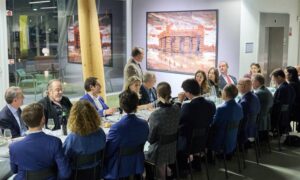
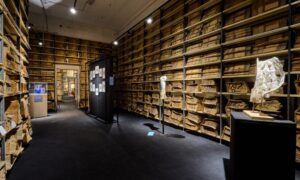
On February 14, at the Village Pavilion of MIND – Milano Innovation District, the results of the Timber Forward Italia project were presented to key stakeholders in the wood construction sector, with the aim of facilitating collaboration, knowledge sharing, and mutual support among all players in the supply chain.
The project, which was in its second phase, involved the Green Building Council Italy, in collaboration with its partner Lendlease, a global leader in real estate specializing in large-scale urban redevelopment projects.
The initiative is part of the action defined by Built by Nature, a network supported by the Laudes Foundation, with the mission of financing actions dedicated to accelerating the adoption of bio-based materials, particularly wood, in the construction sector at the European level.
Through collaboration, knowledge sharing, and mutual support among supply chain stakeholders, the initiative has stimulated change in the sector, promotinginnovative and sustainable practices in support of decarbonization goals.
The reports from the three working groups—Guidelines, Advocacy, and Case History—are available for consultation in digital format on the GBC Italia website.
Timber Forward in numbers
Of the approximately 80 members of the network, 51.4% are involved in planning and design, 23.6% in real estate development, 11.1% in investment, and 13.9% in other sectors.
Sixty-two participants, including many members of GBC Italia, actively contributed to the drafting of the three reports, demonstrating a very high level of engagement.
What sets the Reports apart are the fact sheets, a smart and streamlined tool that guides supply chain players through the processes to be adopted in order to use wood in construction and projects. The Reports serve as a guide for decision-makers and policymakers to understand the advocacy actions to be taken in practical terms, according to a defined timeframe in line with the roadmap for decarbonizing the built environment by 2050. They outline best practices through a selection of case histories.
There are a total of 127 files, divided as follows:
• 44 Guidelines;
• 41 Case History Projects;
• 42 Advocacy Actions.
The Case History table then began data collection work, gathering and documenting around 60 timber-based projects across Italy to begin to paint a picture of this building heritage in Italy.
"Green Building Council Italia has always been at the forefront of promoting sustainable and innovative construction, and the Timber Forward Italia project is a clear expression of this. The adoption of bio-based materials, such as wood, is not only an ecological choice, but an opportunity to rethink the way we build our cities, making them more resilient and focused on people's well-being. The work carried out in this second phase of the project demonstrates that collaboration between the various players in the supply chain is key to accelerating this transition and transforming challenges into opportunities for growth for the entire sector," said Fabrizio Capaccioli, President of GBC Italia.
During the conference presenting the project results, speeches were given by Nadia Boschi, Head of Sustainability Italy and Continental Europe at Lendlease, Joe Giddings, European Networks Lead at Built by Nature, and Silvia Giordano, Timber Forward Italia Project Coordinator at GBC Italia.
As Nadia Boschi pointed out at the opening of the conference: "The wood and bio-based construction movement is growing. The series of projects already completed in Italy reflects a growing momentum, accentuated by significantmarketadvancessuch as the emphasis on the use of wood for major construction sites such as MIND. By activating existing knowledge and information and supporting innovative solutions, we can accelerate the responsible use of bio-based materials for the benefit of the climate, nature, and people."
The opening speeches were followed by speeches from the coordinators of the project's three working groups.
"The implementation of wood and bio-based materials in the construction sector plays a fundamental role in addressing climate challenges in the Italian context,"said Tecla Caroli, Architect PhD, Sustainable Development Consultant at Arup, "Through an integrated and collaborative approach by the working group, the Guideline Committee has worked on this transition with process actions related to sustainability, digitization, design and construction support, and training."
“Perché il legno diventi il cuore della costruzione moderna, dobbiamo unire innovazione, sostenibilità e competitività economica“, ha commentato Stefano Corbella</strong>, Sustainability Officer di COIMA e co-coordinatore del Tavolo Case History.
"Despite Italian excellence in the wood construction sector and the commitment of many professionals and networks, other countries are investing more quickly and effectively in mass timber and bio-based materials for decarbonization,"said Mauro Carlino, Engineer and ARCA Certification Manager (Habitech – Trentino Technology District), coordinator of the Advocacy Table,"Our table was fundamental in coordinating the Italian supply chain and stakeholders involved towards a shared strategy that maximized the effectiveness of the actions of individuals and associations and enhanced national resources, in line with sector policies such as GBC Italia's decarbonization roadmap." In presenting the work of the Roundtable, Mauro Carlino was joined by Ugo Terzi, Head of Assolegno (FederlegnoArredo).
The event concluded with a round table discussion moderated by Marco Caffi, Director of GBC Italia, and attended by Laura Cutaia, Circular Economy Division, Department of Sustainability, Circularity and Adaptation to Climate Change in Production and Territorial Systems at ENEA, Manuela Ojan, Head of Environmental Transition at AMAT Milano, and Matteo Mazzotti, Cassa Depositi e Prestiti.
Timber Forward Italia synergistic for Built by Nature
The initiative is part of the action defined by Built by Nature, a network and fund set up to subsidize actions dedicated to accelerating the adoption of bio-based materials, and in particular wood, in the construction sector at European level.
>In recent years, the construction sector has seen growing interest in solid wood construction, thanks in part to the numerous advantages it offers in terms of sustainability, efficiency, and aesthetics. Wooden constructions are proving to be an efficient and viable solution to the urgent need to reduce carbon emissions and mitigate climate change. However, as highlighted in the final report of the previous phase, "Perception of Timber – Accelerating Change at MIND,"which concluded in February 2023 with the design and assembly of a structural timber module for high-rise commercial buildings in the MIND spaces, there are a number of barriers throughout the entire supply chain, on both the demand and supply sides, which are creating a stalemate with regard to the full and widespread application of timber-based building solutions.