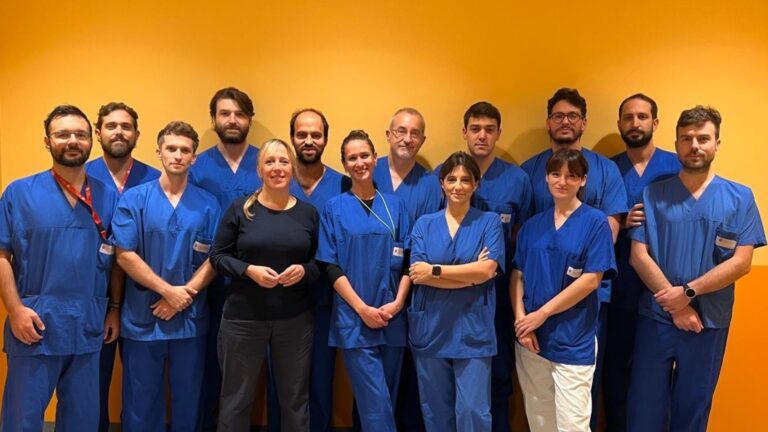
An important step forward in oncological neurosurgery comes fromthe University of Milan andthe IRCCS Galeazzi – Sant'Ambrogio Hospital, which have published an innovative study on the functional organization of the brain in Nature Communications.
The team led by Professor Lorenzo Bello has identified a brain circuit in the right frontal region that is essential for spatial exploration and visuospatial attention. Damage to this network can cause unilateral spatial neglect, a debilitating neurological condition that impairs the ability to perceive one side of space.
Study on 210 patients and awake surgery
The study involved 210 patients and was conducted by integrating:
- advanced neuroimaging;
- machine learning algorithms;
- Intraoperative mapping during awake surgery procedures.
Thanks to this approach, researchers have precisely identified a functional "hub" and its deep connections, demonstrating that its lesion is directly responsible for post-operative attention deficits.
iVSAT: the test that protects cognitive functions in the operating room
Among the most significant innovations is the introductionof iVSAT (intraoperative Visuospatial Selective Attention Test), a rapid test used during surgery to monitor the patient's visuospatial attention in real time.
This tool allows the neurosurgeon to:
- guide tumor resection more safely;
- preserve complex neural networks;
- reduce the risk of permanent cognitive deficits.
Towards increasingly personalized neurosurgery
The study confirms a key principle of modern neurosurgery: function guides surgery, not just anatomy. The goal is to combine radical oncological treatment with the preservation of cognitive functions, improving patients' quality of life and independence.
The results also open up new prospects for neurorehabilitation, thanks to increasingly accurate functional maps that enable personalized therapeutic interventions.