The healthcare sector is responsible for approximately 4–5% of global greenhouse gas emissions and generates significant environmental impacts through energy consumption, water use, waste production, pharmaceuticals, and medical supply chains. Hospitals are among the most energy-intensive public buildings and play a crucial role in the ecological transition toward climate neutrality, circular economy, and sustainable urban systems.
The transition toward smart and efficient hospitals requires integrating digital innovation, energy efficiency, renewable energy, circular resource management, sustainable procurement, and resilient health infrastructure. Within this framework, hospitals are not only healthcare providers but also key actors in sustainable cities and climate adaptation strategies, contributing to public health prevention and environmental sustainability.
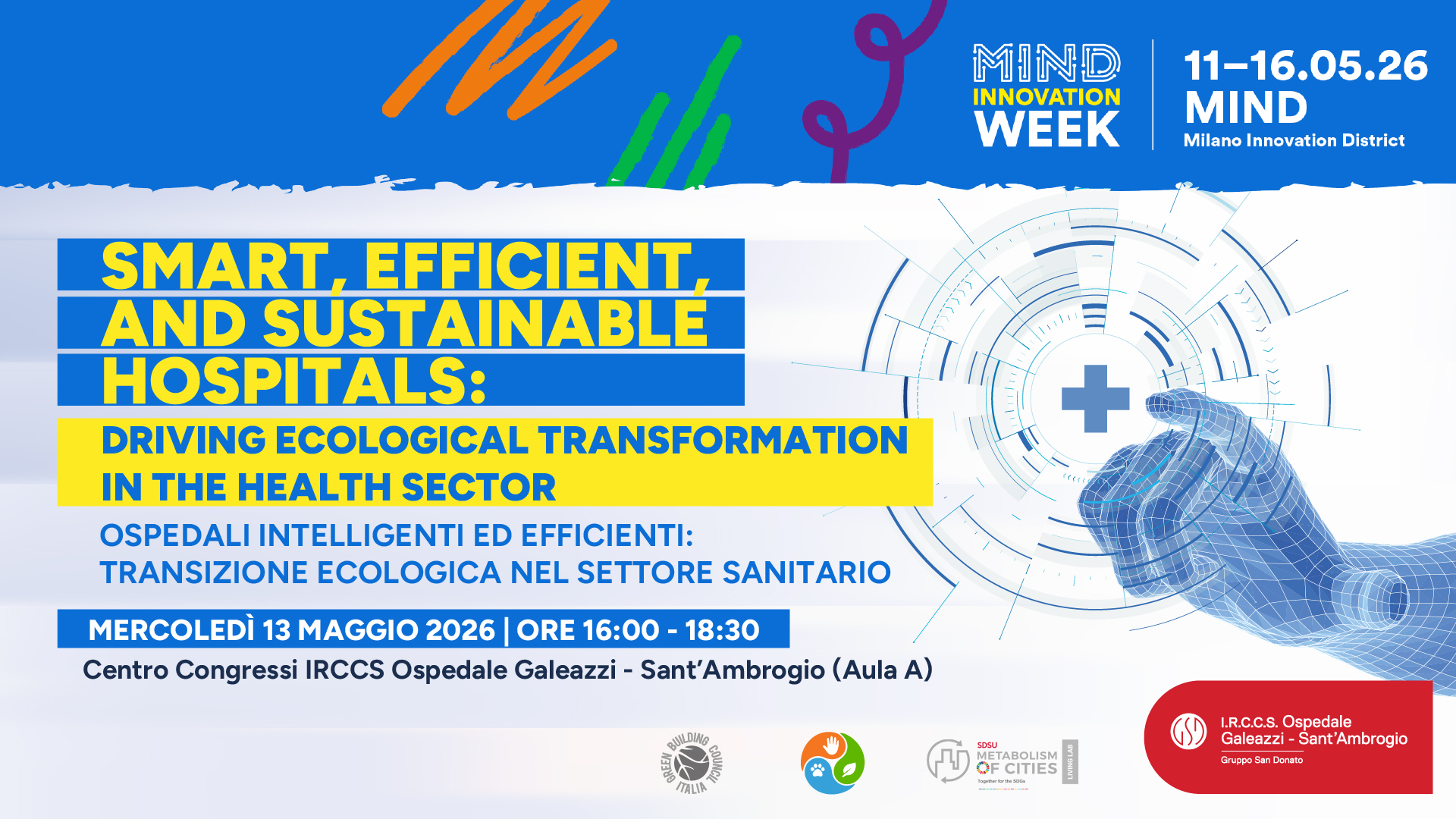
The Milano Innovation District (MIND) represents one of the most advanced innovation ecosystems in Europe, hosting research centers, hospitals, universities, and companies working on life sciences, digitalization, and sustainability. The IRCCS Ospedale Galeazzi – Sant’Ambrogio is a flagship example of a new generation hospital designed with advanced technologies, energy efficiency solutions, and smart infrastructure.
This event is part of MIND Innovation Week, which brings together institutions, researchers, companies, and innovators to discuss the future of innovation, sustainability, and urban development.